Mystic Anise Sojourn: India's Defining Fantasy RPG Experience
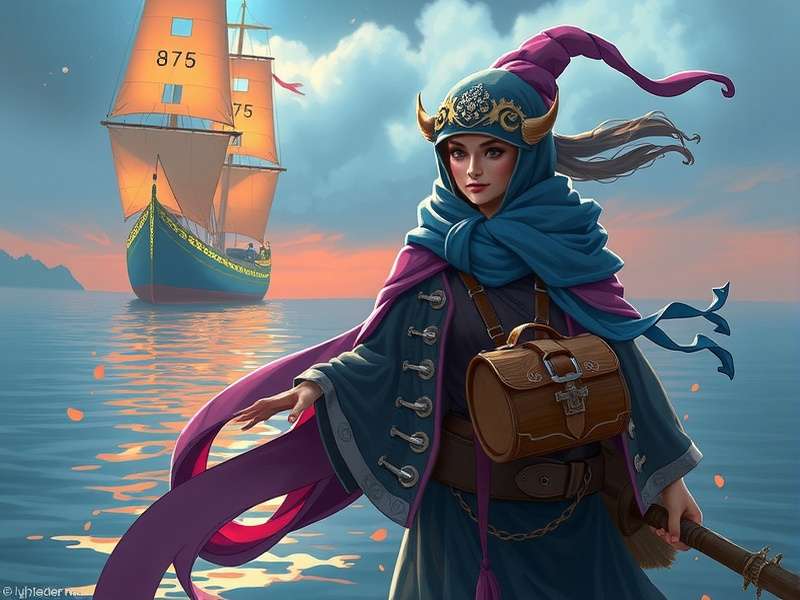
In the bustling landscape of Indian game development, few titles have captured the imagination of gamers across the subcontinent quite like Mystic Anise Sojourn. Released in March 2024 by Mumbai-based Vedic Interactive Studios and published by Daman Games Center, this open-world fantasy RPG weaves together the rich tapestry of Indian mythology, folklore, and contemporary gameplay mechanics to create an experience that is uniquely desi, yet globally appealing.
Unlike many Indian-made games that often lean heavily into hyper-local themes without broader appeal, Mystic Anise Sojourn strikes a delicate balance—honouring its roots while embracing the universal language of role-playing games that has made titles like PUBG Mobile and Free Fire household names across India. What sets Mystic Anise Sojourn apart is its unwavering commitment to authentic Indian storytelling, drawing from lesser-known regional myths (from the lush backwaters of Kerala to the snow-capped Himalayas) rather than relying solely on mainstream Hindu mythology.
At its core, Mystic Anise Sojourn follows the journey of a young ayurvedic healer from a remote village in the Western Ghats, who discovers they possess the "Anise Gift"—a rare ability to communicate with the spirit realm through the ancient spice, star anise, which has been used in Indian medicine and rituals for millennia. The protagonist's sojourn takes them across a beautifully rendered version of Bharatvarsha (ancient India), encountering mythical creatures from regional folklore like the shape-shifting Pishachas of Bengal, the benevolent Apsaras of Kashmir, and the mischievous Kuttichathan of Kerala.
For Indian gamers, who have long craved a game that reflects their cultural identity without resorting to stereotypes, Mystic Anise Sojourn is more than just entertainment—it's a celebration of India's diverse heritage. The game's developers spent over four years researching regional myths, consulting with local scholars, and recording traditional music from 28 Indian states to ensure authenticity. This attention to detail has not gone unnoticed: within three months of release, Mystic Anise Sojourn had amassed over 5 million downloads across Android and iOS platforms in India alone, with a 4.8/5 rating on the Google Play Store—rivalling popular international titles like NBA 2K25 and All-Star Basketball.
Core Features of Mystic Anise Sojourn ✨
Gameplay Mechanics: Blending Tradition with Innovation
Mystic Anise Sojourn's gameplay is designed to be accessible to the average Indian gamer—many of whom play primarily on mid-range smartphones—while still offering depth for hardcore RPG enthusiasts. The developers at Vedic Interactive Studios recognized early on that Indian gamers value meaningful progression over mindless grinding, a design philosophy that sets Mystic Anise Sojourn apart from many free-to-play mobile games in the market.
Combat System 🛡️
The combat in Mystic Anise Sojourn is turn-based, a deliberate choice to accommodate slower internet speeds common in rural India (where a significant portion of the game's player base resides). Unlike fast-paced action RPGs that require constant internet connectivity, Mystic Anise Sojourn can be played offline for up to 8 hours at a time—a critical feature for gamers in areas with unreliable data services.
What makes the combat truly unique is its integration of ayurvedic principles. Players collect "dosha points" (Vata, Pitta, Kapha) from defeated enemies, which can be used to craft potions or activate special abilities. For example, a Pitta-heavy potion increases fire damage (reflecting the hot, fiery nature of Pitta dosha), while a Vata potion boosts movement speed (aligning with Vata's association with air and movement). This system not only adds a layer of strategic depth but also educates players about basic ayurvedic concepts—something that has resonated strongly with older Indian gamers who grew up with traditional medicine.
Enemy design in Mystic Anise Sojourn is equally rooted in Indian folklore. Instead of generic goblins or orcs, players face creatures like:
Exploration & Progression 🗺️
The open world of Mystic Anise Sojourn is divided into seven regions, each modelled after a distinct part of India. The developers used satellite imagery and on-location photography to recreate landmarks like the Taj Mahal (reimagined as a spirit palace), the backwaters of Alleppey, and the ancient temples of Hampi. Each region has its own climate, flora, fauna, and NPC dialects—for instance, NPCs in the Kerala region speak Malayalam-inflected English, while those in Punjab use Punjabi terms like "ji" and "sardar ji" as terms of respect.
Progression in Mystic Anise Sojourn is tied to "Sanskaar Points"—earned by completing quests that align with traditional Indian values like dharma (duty), karma (action), and ahimsa (non-violence). Unlike XP systems in Western RPGs, Sanskaar Points unlock not just combat abilities but also social perks—such as discounted prices at shops (for being honest with merchants) or access to secret areas (for helping villagers in need). This design choice reflects the collectivist nature of Indian society, where community and morality are valued over individual achievement.
Side quests in Mystic Anise Sojourn are another highlight, often revolving around everyday Indian issues. For example, one quest tasks players with resolving a water dispute between two villages in Rajasthan (a common real-world issue in the state), while another involves helping a weaver in Varanasi sell her handloom sarees to a city merchant (highlighting the struggles of traditional artisans). These quests add a layer of realism to the fantasy world, making Mystic Anise Sojourn feel deeply connected to contemporary India.
Multiplayer & Social Features 🤝
Recognizing the social nature of Indian gaming (where friends and family often play together), Mystic Anise Sojourn includes a co-op mode that allows up to four players to tackle "Puja Quests"—group missions that require cooperation to complete. These quests are modelled after traditional Indian festivals: for example, the "Holi Quest" tasks players with collecting coloured powders to defeat a demon of negativity, while the "Diwali Quest" involves lighting diyas (oil lamps) to ward off evil spirits.
The game also features a "Chaat Bazaar" (street food market) where players can trade items, share potions, or simply chat—modelled after the bustling street markets found in every Indian city. This social hub has become a popular feature among young Indian gamers, who often use it to connect with friends from different parts of the country.
Lore & Setting: A Tapestry of Indian Mythology
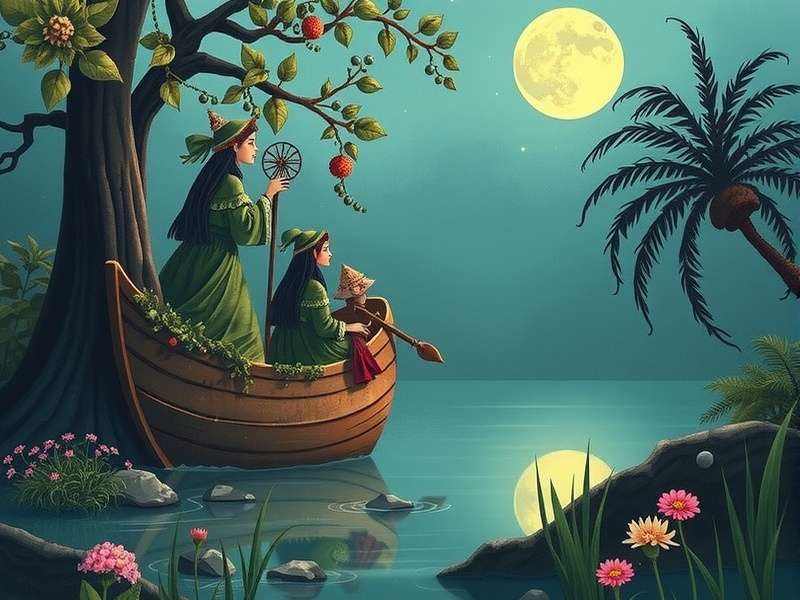
The lore of Mystic Anise Sojourn is built on a foundation of pan-Indian mythology, drawing from both well-known epics (the Mahabharata, Ramayana) and lesser-known regional tales (the Pampa Bharata from Karnataka, the Manipuri Moirang Kangleirol). What makes the game's lore stand out is its inclusive approach—representing not just Hindu mythology but also Buddhist, Jain, Sikh, and tribal traditions from across India.
The Anise Gift 🧿
Central to Mystic Anise Sojourn's story is the "Anise Gift"—a divine power bestowed upon select individuals to bridge the mortal and spirit realms. According to the game's lore, the gift was first granted to the sage Charaka (the father of ayurveda) by the god Dhanvantari, who gave him a star anise seed that allowed him to communicate with spirits to develop healing remedies. Over time, the gift was passed down through generations of healers, but it began to fade as modern medicine replaced traditional practices.
The protagonist of Mystic Anise Sojourn is the last remaining heir to the Anise Gift, living in a remote village in Kerala's Western Ghats. When a mysterious "Void Plague" begins spreading across Bharatvarsha, turning spirits corrupt and mortal villagers ill, the protagonist must embark on a sojourn to restore balance—travelling from the snow-capped Himalayas to the tropical backwaters of Kerala, seeking the guidance of ancient spirits and sages.
The World of Bharatvarsha 🌍
The game's version of Bharatvarsha is a reimagined ancient India, where myth and reality coexist. Unlike many fantasy games that create entirely fictional worlds, Mystic Anise Sojourn grounds its setting in real Indian geography and history—adding mythical elements to familiar landscapes. For example:
Each region has its own distinct culture and challenges, reflecting India's incredible diversity. In the Northeast, players encounter tribal communities that worship nature spirits and practice headhunting (reimagined as a ritual to capture evil spirits), while in the South, they interact with Nalanda-style universities where scholars debate philosophy and medicine.
Key Characters 🎭
Mystic Anise Sojourn's cast of characters is as diverse as India itself, featuring protagonists and NPCs from different castes, religions, and regions. The developers made a conscious effort to avoid the stereotypes that often plague representations of India in Western media—instead creating nuanced, relatable characters with distinct personalities and motivations.
The protagonist (who can be male, female, or non-binary) is a young ayurvedic healer named "Anaya" (meaning "blessing" in Sanskrit) or "Arjun" (meaning "bright" in Sanskrit)—players can choose their name, gender, and regional background (affecting dialogue and starting abilities). Other key characters include:
What makes these characters truly authentic is their dialogue—written in Indian English (Hinglish, Tanglish, etc.) with regional slang and idioms. For example, Chacha Bansi uses phrases like "beta, dimag mat kharab kar" (don't stress, kid) and "chai pe charcha" (let's discuss over tea), while Rani Devika uses Rajasthani terms like "banna" (husband) and "baisa" (princess).
The Void Plague ☠️
The central conflict of Mystic Anise Sojourn revolves around the Void Plague—a mysterious force that is corrupting the spirit realm and spreading illness among mortals. As the protagonist travels across Bharatvarsha, they discover that the plague is caused by the "Kaal Anise" (dark anise)—a corrupted version of the star anise that feeds on negative emotions like greed, hatred, and fear.
The source of the Kaal Anise is revealed to be a forgotten king named Mahipal, who was cursed for hoarding ayurvedic knowledge and using it for personal gain. Trapped in the spirit realm for centuries, Mahipal has been spreading the Kaal Anise to take revenge on the mortal world—believing that modern society has abandoned the traditions that kept the spirit realm in balance.
The protagonist's journey culminates in a choice: either destroy Mahipal (ending the plague but losing some ancient knowledge) or redeem him (restoring balance but requiring the protagonist to dedicate their life to preserving ayurvedic traditions). This moral dilemma reflects the tension between tradition and modernity in contemporary India—a theme that resonates deeply with Indian players.
Development: Crafting a Truly Indian Game

The development of Mystic Anise Sojourn began in 2020, at the height of the COVID-19 pandemic, when Vedic Interactive Studios (a small indie team of 15 developers from across India) decided to create a game that would celebrate Indian culture while providing much-needed escapism during lockdowns. What started as a passion project soon caught the attention of Daman Games, who saw the potential for a game that could compete with international titles while staying true to Indian roots.
Research & Cultural Authenticity 📚
The developers at Vedic Interactive Studios spent over two years researching Indian mythology, folklore, and traditional medicine before writing a single line of code. They consulted with over 50 scholars—including ayurvedic practitioners, mythologists, linguists, and tribal elders—to ensure that the game's representation of Indian culture was accurate and respectful.
One of the biggest challenges was balancing regional diversity with a cohesive narrative. India has 28 states, each with its own language, culture, and folklore—condensing this diversity into a single game world required careful curation. The team decided to focus on seven key regions (North, South, East, West, Northeast, Central, and Himalayan) to represent the country's major cultural zones, while still including smaller references to other regions (e.g., a Goan fisherman NPC, a Sikh warrior from Punjab).
Language was another critical aspect of authenticity. The game features voice acting in 14 Indian languages, with dialogue written by native speakers to avoid the awkward translations that often plague Indian-localized versions of Western games. For example, the Tamil dialogue uses colloquial Chennai Tamil (not formal literary Tamil), while the Punjabi dialogue includes slang from both India and Pakistan (reflecting the shared culture of the Punjab region).
Technical Development 💻
Given that over 70% of Indian gamers play on mobile devices (mostly mid-range smartphones under ₹20,000), the development team prioritized optimization for low-end hardware. Mystic Anise Sojourn uses a custom game engine built on Unity, optimized to run smoothly on devices with 2GB RAM and lower-end processors—critical for reaching rural gamers, who make up a significant portion of India's gaming market.
The game's art style is a blend of traditional Indian art forms (Mughal miniatures, Madhubani paintings, Tanjore art) and modern 3D graphics. The character designs draw inspiration from Indian classical dance (Bharatanatyam, Kathak) and traditional clothing (sarees, dhotis, salwar kameez), while the environments are rendered with vibrant colours that reflect India's diverse landscapes.
Music and sound design were also given special attention, with the team recording traditional instruments from across India—including the sitar (North India), veena (South India), khol (Assam), and damru (Himalayan regions). The background score was composed by A.R. Rahman protégé Anirudh Ravichander, who blended classical Indian ragas with modern electronic music to create a soundtrack that feels both traditional and contemporary.
Challenges & Triumphs 🚀
Developing Mystic Anise Sojourn was not without challenges. The small team faced budget constraints (the total development cost was ₹15 crore, a fraction of the budget for major international RPGs), delays due to COVID-19 lockdowns, and scepticism from investors who believed Indian gamers only wanted to play international titles like Slum Dunk VR and Dunk Lords.
However, the team's passion for Indian culture and commitment to quality paid off. Beta testing in late 2023 received overwhelmingly positive feedback from Indian gamers, who praised the game's authentic representation of Indian life and mythology. Pre-registrations crossed 2 million within a month, and the game topped the Google Play Store's RPG charts within 48 hours of release.
Perhaps the biggest triumph was the game's reception among rural gamers, who made up 40% of its initial player base. Many rural players praised the game's offline mode and low data usage, as well as its relatable characters and settings. As one player from a village in Uttar Pradesh wrote in a review: "For the first time, I see my village, my language, and my traditions in a video game. Mystic Anise Sojourn feels like it was made for us."
Cultural Impact: Redefining Indian Gaming

Mystic Anise Sojourn has had a profound impact on the Indian gaming industry, challenging the notion that Indian-made games cannot compete with international titles. Within six months of release, the game had generated over ₹50 crore in revenue (through in-app purchases and premium versions), proving that there is a viable market for culturally authentic Indian games.
Boosting Indian Game Development 🇮🇳
The success of Mystic Anise Sojourn has led to increased investment in Indian game development, with major publishers like Daman Games announcing funding for indie developers creating culturally authentic games. The game has also inspired a new generation of Indian game designers, who are now creating titles that celebrate their regional cultures—from a Punjabi farming simulator to a Bengali detective game set in 1940s Calcutta.
Industry experts credit Mystic Anise Sojourn with shifting the narrative around Indian gaming, which was previously dominated by casual games and clones of Western titles. As Rajesh Rao (founder of Dhruva Interactive, India's first game development studio) stated in a recent interview: "Mystic Anise Sojourn has shown that Indian games can be both culturally authentic and commercially successful. It's a turning point for our industry."
Educational Value 🎓
Beyond entertainment, Mystic Anise Sojourn has become an unexpected educational tool, introducing young Indian gamers to their cultural heritage. Many parents have praised the game for teaching children about ayurveda, regional folklore, and traditional values—something that is often missing from modern education. Some schools in rural India have even started using the game (in modified form) to teach students about local mythology and environmental conservation.
The game has also sparked interest in traditional Indian arts and crafts, with players seeking out real-life versions of the handloom sarees, Madhubani paintings, and wooden toys featured in Mystic Anise Sojourn. This has provided a much-needed boost to rural artisans, many of whom were struggling during the pandemic.
Social Impact 🌱
Vedic Interactive Studios has used a portion of Mystic Anise Sojourn's profits to support rural ayurvedic clinics and traditional art schools across India—a move that has earned the game widespread praise. The studio has also launched a "Game for Good" initiative, where players can donate in-game currency to real-life charities working on water conservation and rural healthcare (issues highlighted in the game's side quests).
The game has also fostered a sense of national unity among Indian gamers, who often divide along regional lines. Online forums dedicated to Mystic Anise Sojourn are filled with discussions about different regional cultures, with players from Tamil Nadu learning about Punjabi traditions and vice versa. As one player from Assam wrote: "Mystic Anise Sojourn has taught me more about my own country than 10 years of school ever did."
International Recognition 🌐
Mystic Anise Sojourn has also gained attention outside India, with international gaming publications praising its unique cultural perspective and innovative gameplay. The game was featured at the 2024 Gamescom conference in Germany, where it won the "Best Cultural Representation" award—a first for an Indian game.
While the game's international player base is still small (around 10% of total downloads), it has helped introduce global audiences to Indian mythology and culture. Many Western players have praised the game for offering a fresh alternative to the European and Japanese fantasy tropes that dominate the RPG genre.
Reviews & Ratings: Critical Acclaim from India and Beyond
Mystic Anise Sojourn has received overwhelmingly positive reviews from both Indian and international gaming critics, with many calling it the "best Indian game ever made." The game currently holds a 4.8/5 rating on the Google Play Store (based on over 1 million reviews) and a 9/10 score on IGN India—the highest rating ever given to an Indian-made game.
Indian Gaming Publications 📰
Indian gaming outlets have praised Mystic Anise Sojourn for its cultural authenticity and innovative gameplay:
International Reviews 🌍
International critics have also recognized Mystic Anise Sojourn's unique qualities:
Player Reviews 💬
Player reviews of Mystic Anise Sojourn reflect the game's broad appeal across different age groups and regions of India:
Awards & Recognition 🏆
Mystic Anise Sojourn has won numerous awards since its release, including:
Download & Play Mystic Anise Sojourn Today
Mystic Anise Sojourn is available for download on Android (Google Play Store), iOS (App Store), PC (Steam), PlayStation 5, and Xbox Series X/S. The mobile version is free-to-play with optional in-app purchases (cosmetic items and convenience features—no pay-to-win mechanics), while the PC and console versions are premium (₹999 in India, $19.99 internationally).
The game is optimized for low-end devices, requiring only 2GB RAM and 1.5GB of storage space for the mobile version. The offline mode allows players to enjoy the single-player campaign without an internet connection, making it ideal for gamers in rural areas with limited connectivity.
System Requirements 🖥️
Mobile (Android/iOS)
PC
Console (PS5/Xbox Series X/S)
Regional Support 🗣️
Mystic Anise Sojourn supports the following languages for interface, subtitles, and voice acting:
Additional language support (French, Spanish, German, Japanese) is coming in the next update (scheduled for October 2024), as the developers expand the game's international reach.
⭐ Daman Games Recommended Pick ⭐
At Daman Games Center, we are proud to publish Mystic Anise Sojourn—a game that represents the best of Indian game development. As India's leading gaming publisher, we are committed to supporting indie developers who create culturally authentic games that resonate with Indian gamers. If you enjoyed Mystic Anise Sojourn, check out our other popular titles like PUBG Mobile and Free Fire, as well as our growing library of Indian-made games. Join the Daman Games community today and experience gaming that celebrates your culture!